Modular
Each module serves a defined area of medical education and can be introduced on its own.

AI-SUPPORTED MEDICAL EDUCATION INFRASTRUCTURE
with intelligence, care and trust
Connected tools for learning, clinical reasoning, simulation and assessment. Powered by artificial intelligence, guided by clinicians and educators, traceable at every step.
OUR FIRST MODULE
In pilot
Safe, structured, ethically guided simulated clinical decision-making practice.
AiMed@AI-Patients is the first module of the AiMed platform. It supports learners as they reason through core clinical problems, make decisions, and receive structured evaluation of those decisions.
About
AiMed approaches medical education as a connected system, in which each part can inform the others, be measured and be improved.
AiMed is an AI-supported, modular educational infrastructure for medical schools. It works alongside existing academic structures and links them, so that what is taught, practised and assessed can be followed as a whole. Its modules are designed to connect into a shared network over time, beginning with AI-Patients.
Each module serves a defined area of medical education and can be introduced on its own.
Modules share the same data and standards, so the work done in one becomes visible in the others.
AiMed@AI-Patients, the first module, is now in pilot. AI-PBL and AI-OSCE follow, and further modules will extend the network over time.
About
Good education also needs a good system.
Medical schools have accomplished faculties and strong educational traditions. Yet learning objectives, clinical experience, assessment, and feedback often live in separate tools and separate units.
This makes it difficult to see, in a coherent way, what experiences a learner has had, how decisions were made, and how development unfolds over time. AiMed was founded to close these gaps.
Case diversity and opportunities to make decisions differ between rotations and clinical settings.
Structured clinical examinations are valuable, but their demands on time, educators, and organisation limit how frequently they can be repeated.
Grades and isolated exams rarely show how decision-making develops over time, and accreditation evidence is often assembled after the fact.
About
AiMed aims to connect the scattered parts of medical education.
Which learning objective is taught in which activity, and assessed by which exam, can be seen at a glance.
The cases a student meets, the skills they gain and the way they reason clinically can be followed in a single record throughout medical school.
Assessment results can become feedback that shows each learner what to improve.
Data gathered in teaching and assessment can serve as evidence in self-evaluation reports and accreditation.
These connections are being built module by module. With each new module, the picture becomes clearer.
Modules
Each AiMed@X module serves one area of medical education. All of them share the same principles, standards and platform, so that they can be connected to one another.
AiMed@AI-Patients lets students practise clinical decision-making with virtual patients, from the first encounter to the management plan. It is currently being piloted with medical students.
AiMed@AI-PBL facilitates problem-based learning sessions using a Socratic approach. AiMed@AI-OSCE supports the design and scoring of structured clinical examinations.
Further modules are planned, beginning with AiMed@Quality for quality assurance and accreditation. Later modules will extend AiMed@X from programme evaluation to student and faculty support and development, on the same platform and with the same principles.
Team
Academic medicine, clinical practice and software development, working at the same table.
Two professors of medicine and a health-tech entrepreneur, who share the view that educational value and technical design must be planned together.
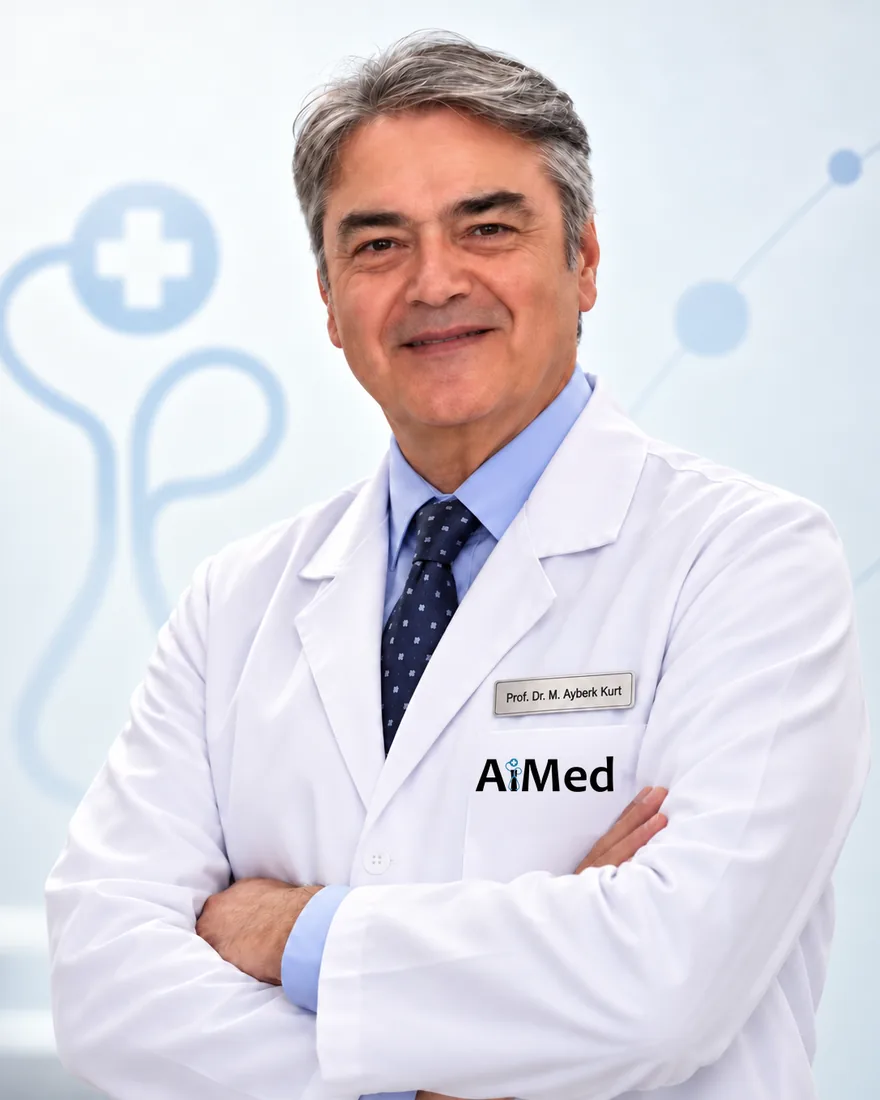
Founder and CEO
Professor of Anatomy and former dean of a faculty of medicine. Brings experience in medical education, accreditation and institutional quality to AiMed's academic and strategic direction.
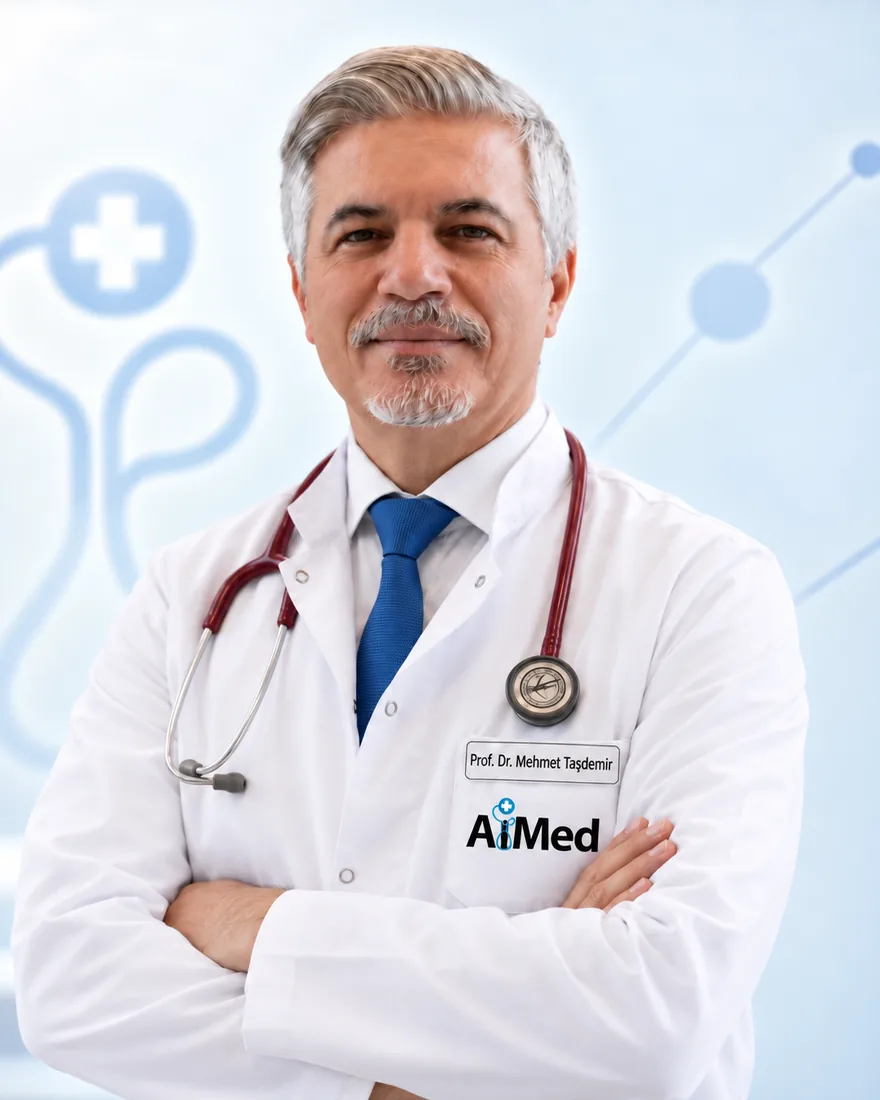
Co-founder, clinical lead
Professor of Paediatrics, specialising in paediatric nephrology. Leads clinical accuracy, guideline alignment and expert review of cases.
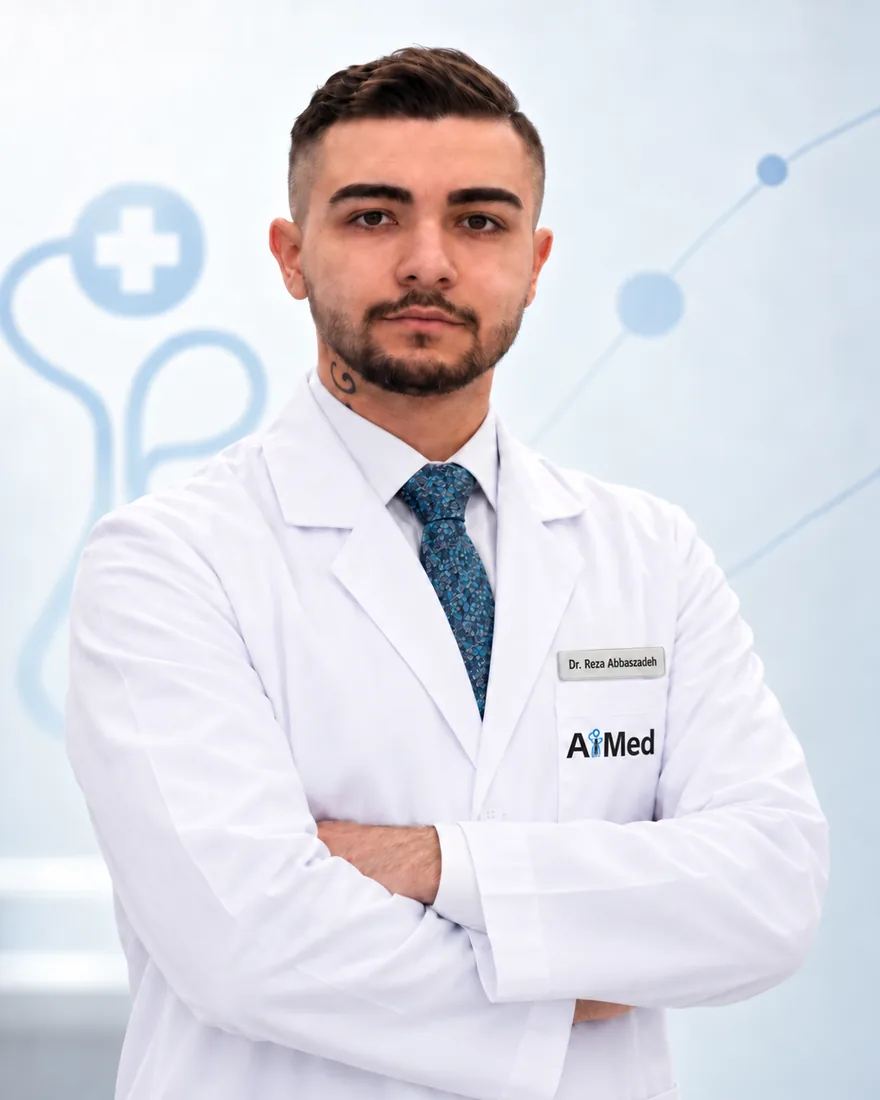
Co-founder, business development
Health-tech entrepreneur. Leads business development and partnerships, and contributes to product architecture.
The people who build the platform and design its educational and assessment logic.

Lead software developer
Built the AiMed platform and leads its software development.

Researcher, educational design
Designs the problem-based learning structure and Socratic guidance in AI-PBL.
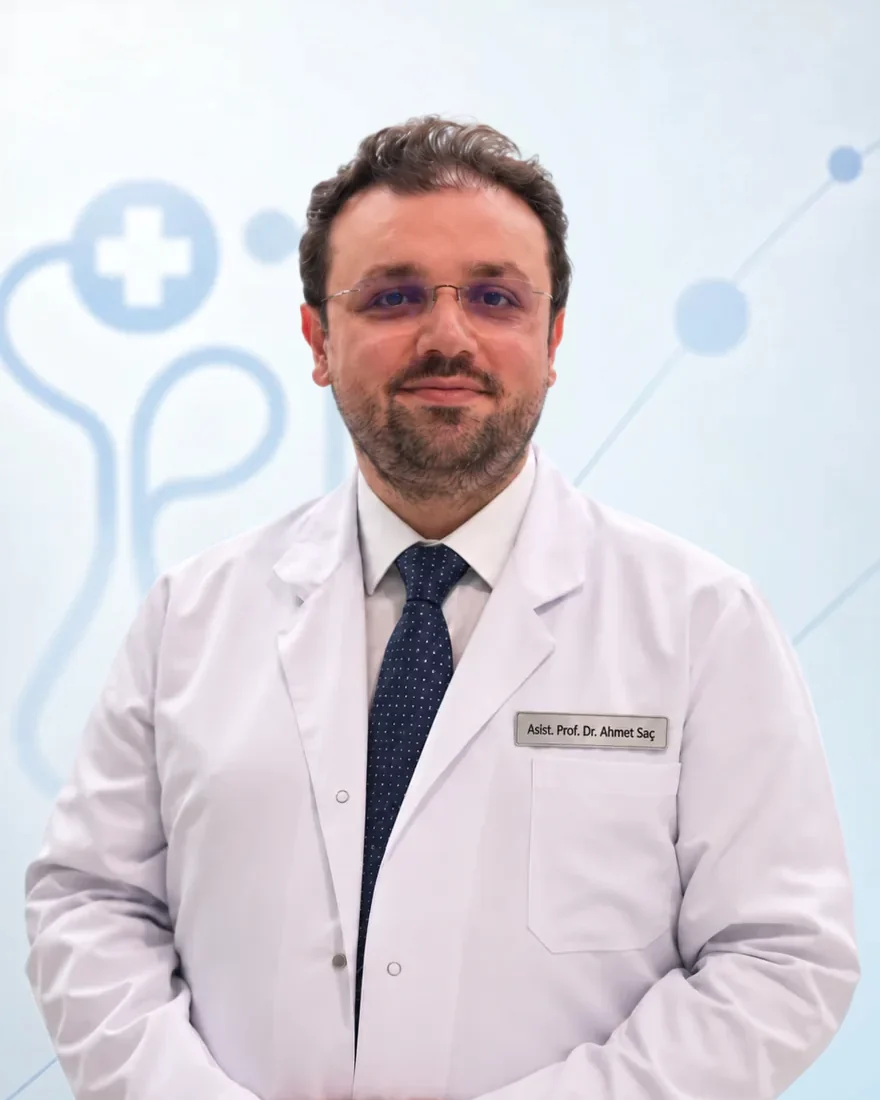
Researcher, assessment
Works on competency measurement, clinical assessment and accreditation evidence.
Advisors provide an external perspective and a sense of direction across clinical validity, educational strategy, technical architecture, and institutional alignment.
Advisors guiding pedagogy, assessment, and medical education.

Education Advisor
Advises on clinical education, assessment, and study design.

Education Advisor
Provides strategic guidance in medical education, programme development, and quality processes.
Advisors guiding AI architecture and technical product strategy.

Technical Advisor
Provides technical guidance on AI and computational approaches.
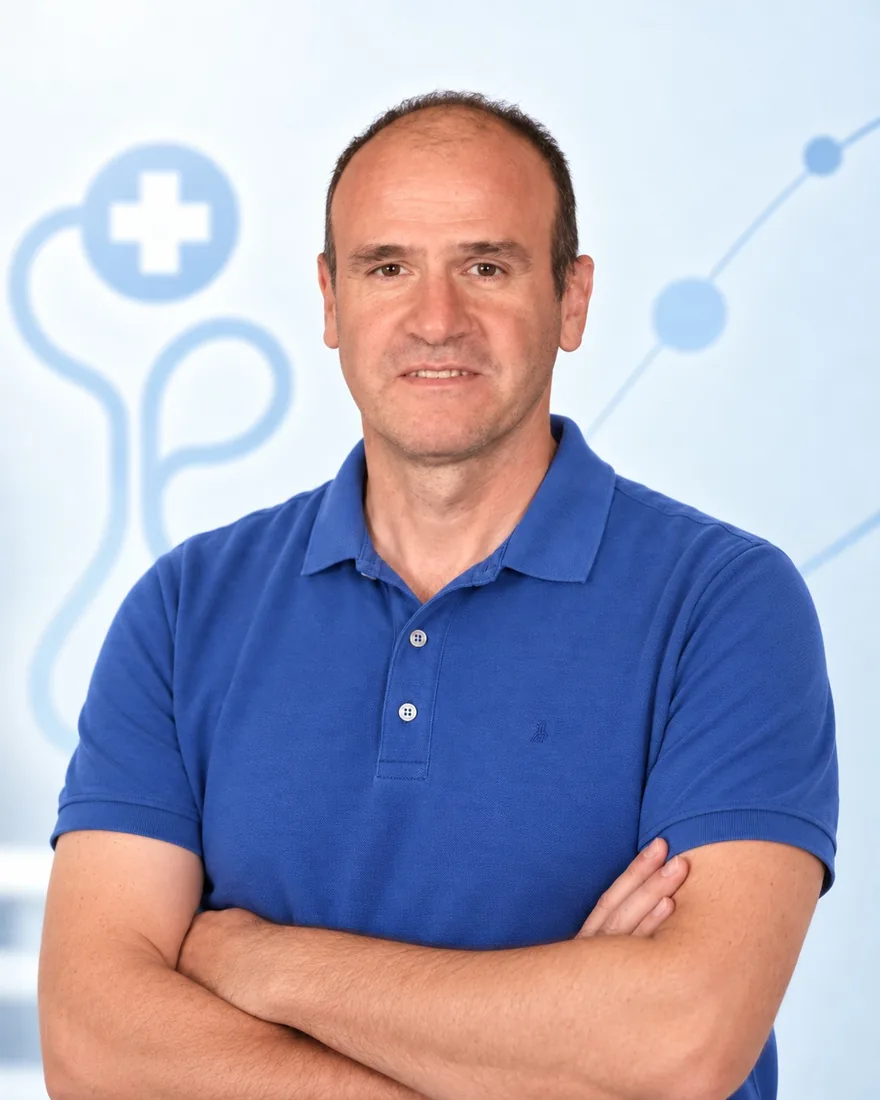
Technical Advisor
Advises on LLM architecture, agentic AI, and technical product strategy.
To make medical education safer, more evidence-based and more measurable.
A modular educational infrastructure that medical schools can rely on at institutional scale.
The commitments that guide every AiMed module.
AiMed supports real patient experience, faculty judgement and clinical responsibility, and is not designed to replace them.
Each module is designed around a clear educational purpose and measurable learning outcomes.
AI-supported work takes place within ethical safeguards and clearly stated limits of use.
Product decisions are shaped by pilots, feedback from educators and students, and real educational needs.
Contact
For institutional access, pilots or collaboration, write to us.
AiMed Sağlık ve Eğitim Teknolojileri A.Ş.
Sanayi Mah. Teknopark Bul. No:1/4C İç Kapı No: 313
34906 Pendik / İstanbul, Türkiye
AiMed@AI-Patients is being developed with support from the TÜBİTAK-TEYDEB 1812 Investment-Based Entrepreneurship Support Program (Project No: 2250628).
AiMed@AI-Patients, TÜBİTAK-TEYDEB 1812 Yatırım Tabanlı Girişimcilik Destek Programından yararlanılarak geliştirilmektedir (Proje No: 2250628).
AiMed@AI-PBL is being developed with support from the TÜBİTAK-TEYDEB 1507 SME R&D Start-Up Support Program (Project No: 7260500).
AiMed@AI-PBL, TÜBİTAK-TEYDEB 1507 KOBİ Ar-Ge Başlangıç Destek Programından yararlanılarak geliştirilmektedir (Proje No: 7260500).
All responsibility for the products and services lies with AiMed Sağlık ve Eğitim Teknolojileri A.Ş.
Ürün ve hizmetlerle ilgili tüm sorumluluk AiMed Sağlık ve Eğitim Teknolojileri A.Ş.'ye aittir.
